
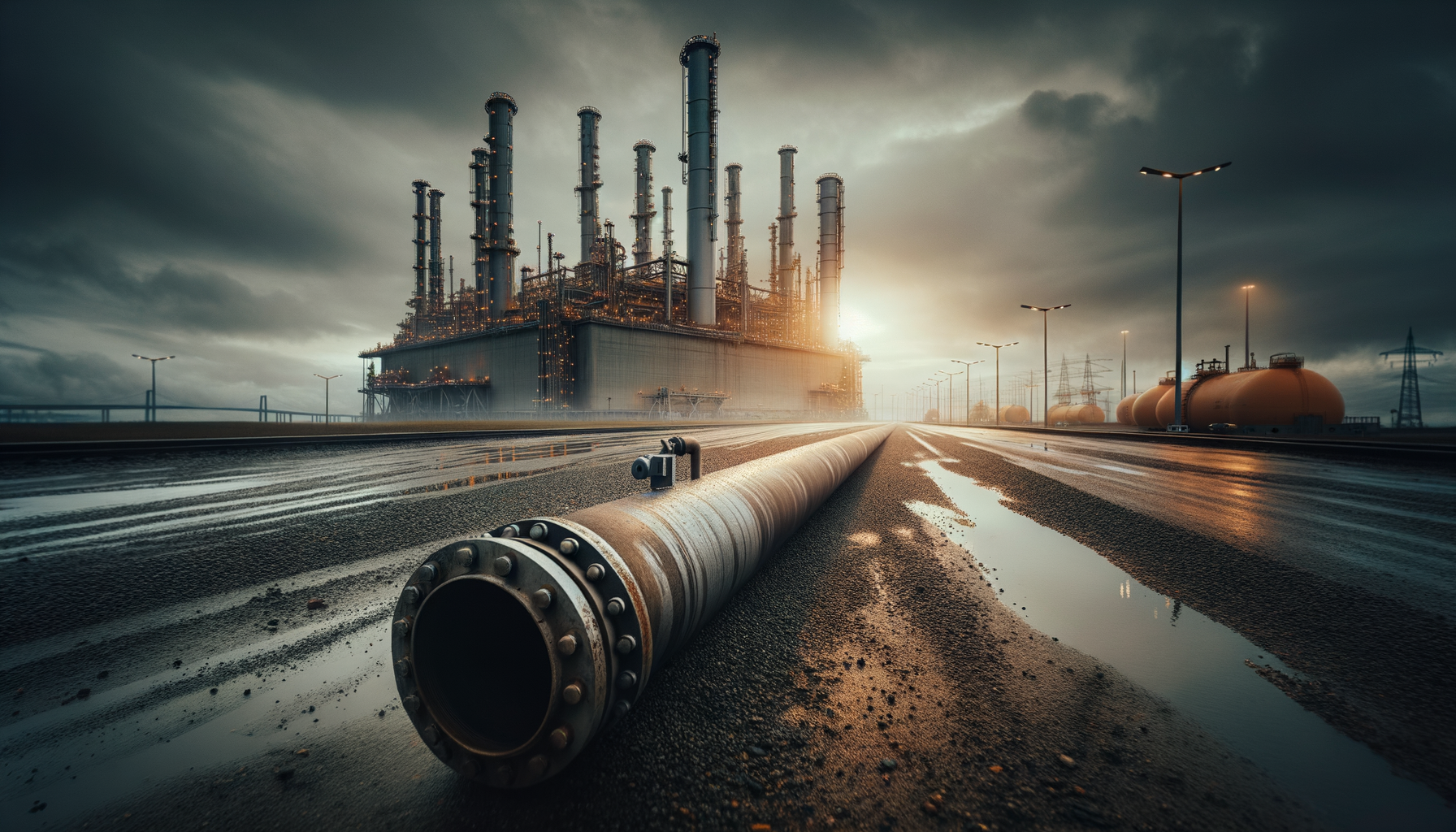
The Strike That Rewires a Decade of City Energy
Three weeks ago, Iranian missiles slammed into the Ras Laffan Industrial City on Qatar's northeastern coast. Today, roughly 80 million tonnes per year of LNG capacity — nearly 20% of global supply — sits offline. Two LNG trains, S4 and S6, are destroyed. The Pearl gas-to-liquids facility, struck on March 18, is burning through its last reserves of operational credibility. Force majeure was declared on March 4. Helium output is down 14%. Naphtha, 6%. Sulphur, 6%.
The numbers are staggering. But the numbers are not the story. The story is what happens next in Seoul, Milan, Dhaka, Shanghai, Antwerp, and every other city whose grid, heating network, or transit fleet was quietly tethered to Qatari gas.
Qatar's Energy Minister Saad Sherida Al-Kaabi did not mince words: "The entire region has been set back 10 to 20 years."
What Was Lost
Qatar produced an average of 6.7 million tonnes of LNG per month in 2025. Ninety percent of those cargoes sailed to Asia. The force majeure declaration covers contracts stretching across continents: S4 supplied Italy's Edison; S6 supplied South Korea's KOGAS, Belgium's EDFT, and Shell's operations in China. Those contracts are now suspended for up to five years.
Before the strikes, Qatar's North Field East expansion — designed to add 32 million tonnes per year of capacity — was already slipping to 2027. That timeline is now fiction. The nation's ambition to scale from 77 million to 126 million tonnes annually by 2030 has been shelved indefinitely. Rebuilding the damaged infrastructure will cost an estimated $26 billion and take three to five years. Qatar faces roughly $20 billion a year in lost energy revenue in the interim.
Al-Kaabi was blunt about the preconditions for recovery: "For production to restart, first we need hostilities to cease."
Wood Mackenzie had forecast 35 million tonnes of new global LNG supply in 2026. That forecast is now a relic. Every additional month of disruption removes approximately 1.5% of annual global LNG availability.
City by City: Where the Shock Lands
Seoul. KOGAS, the world's largest single LNG buyer, held a direct contract on the S6 train. Seoul's metropolitan district heating system — serving millions — now faces sharply higher procurement costs at the precise moment the city is electrifying its subway extensions and bus fleet. Every dollar added to LNG is a dollar subtracted from urban capital budgets.
Milan and Rome. Edison's S4 contract fed gas networks serving northern and central Italian cities. With force majeure in effect, municipal utilities must now source spot cargoes at crisis pricing — or reactivate coal capacity that was supposed to be retired.
Antwerp and Brussels. Belgium's EDFT held allocations on both damaged trains. Industrial heating and power infrastructure in these cities is now exposed to supply gaps heading into the 2026–2027 winter storage injection season. Incomplete storage means cold buildings and expensive electricity.
Shanghai and coastal China. Shell's S6 allocation was bound for Chinese terminals. Coastal cities are already accelerating coal plant restarts for baseload power to offset urban grid shortfalls — a grim reversal for municipal air-quality targets.
Dhaka and Karachi. Bangladesh and Pakistan, among the most price-sensitive LNG importers on Earth, were already rationing. Surging spot prices now threaten to force municipal utilities to curtail gas for district power plants, CNG transport fleets, and housing projects that depend on affordable fuel. Summer cooling demand is weeks away.
Mumbai and Delhi. India is assessing supply risks across crude and LNG simultaneously, monitoring import terminals for price spikes that would cascade into urban power and transport costs.
The Structural Repricing
This is not a disruption. It is a structural repricing of city energy for the rest of the decade.
Before March 2, urban planners from Wilhelmshaven to Kochi to Tianjin could model their capital programmes on one assumption: Qatar's massive expansion would flood the market by 2030, easing prices and underwriting the economics of new LNG import terminals, district heating conversions, and gas-fired peaking plants.
That assumption is dead.
Global operators are maximizing output at city-adjacent facilities — U.S. Gulf Coast terminals are running flat out, serving East Coast metros and rerouting cargoes to Asia and Europe. Maintenance is being deferred everywhere, which buys months but builds risk. North Field East slippage means rebalancing is structurally constrained through at least 2028.
For European cities that pivoted to Qatari LNG after Russian pipeline gas disappeared, the arithmetic is cruel: they must now compete for a smaller global pool with Asian buyers who have deeper contractual relationships and, in many cases, more flexible pricing.
What Comes Next
The cities that move fastest to diversify — battery storage on urban grids, accelerated heat-pump deployment, long-duration energy storage, even nuclear microreactors for district systems — will absorb this shock. The cities that wait for Ras Laffan to come back online are betting on a timeline that Al-Kaabi himself cannot guarantee.
The minister said something else worth remembering: "I never in my wildest dreams would have thought that Qatar would be — Qatar and the region — in such an attack, especially from a brotherly Muslim country in the month of Ramadan."
That sentence contains the entire lesson. Cities built their energy futures on the assumption that geopolitics would remain stable enough for supply to flow. Ras Laffan is the proof that it won't. The cities that internalize that — and budget accordingly — will be the ones still functioning when the next strike lands somewhere no one imagined.